

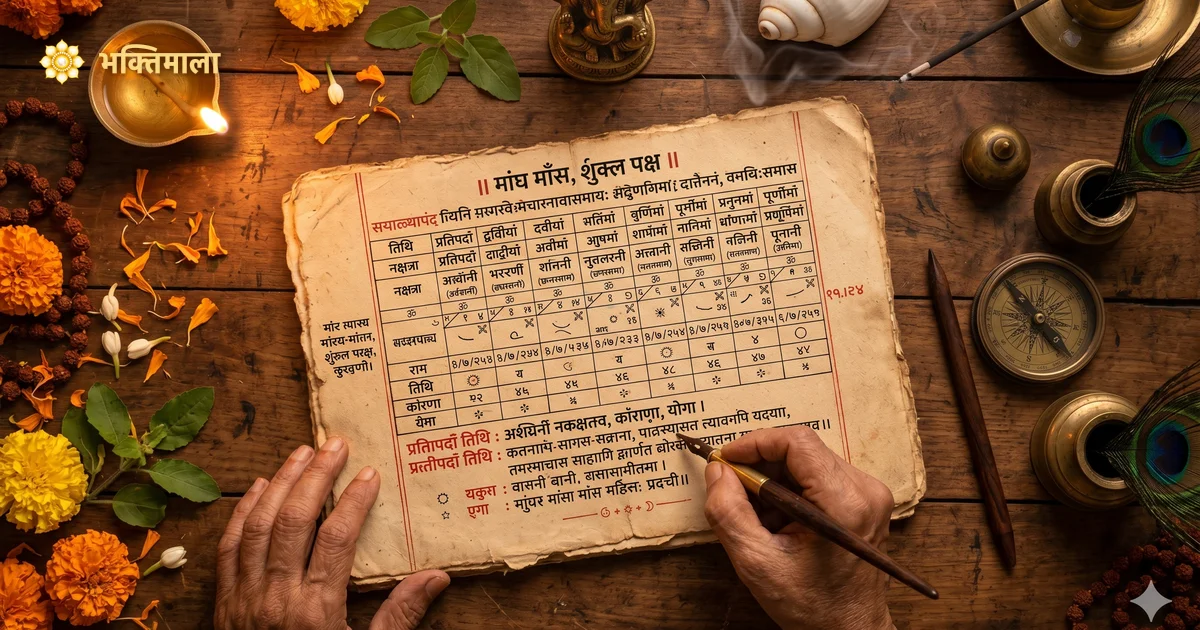
पंचांग समझें: तिथि, नक्षत्र, योग, वार और करण का अर्थ
हिंदू पंचांग के पाँच प्रमुख अंग — तिथि, वार, नक्षत्र, योग और करण। जानें इनका अर्थ और शुभ समय चुनने में इनकी भूमिका।
पंचांग शब्द संस्कृत से आया है: पंच (पाँच) + अंग (भाग)। ये पाँच अंग हिंदू पंचांग का आधार हैं और इन्हीं से पूजा-पाठ, संस्कारों और महत्वपूर्ण कार्यों के लिए शुभ समय निकाला जाता है। आइए जानें, हर अंग का क्या अर्थ है।
1. तिथि (चंद्र दिवस)
तिथि चंद्र दिवस है — सूर्य और चंद्रमा के बीच का कोणीय संबंध। चंद्रमा प्रतिदिन सूर्य से लगभग 12° आगे बढ़ता है, और हर 12° का अंतर एक तिथि कहलाता है। एक चंद्र मास में 30 तिथियाँ होती हैं — 15 शुक्ल पक्ष में और 15 कृष्ण पक्ष में।
प्रमुख तिथियाँ: प्रतिपदा (1), पंचमी (5), सप्तमी (7), एकादशी (11), पूर्णिमा और अमावस्या।
तिथि इसलिए महत्वपूर्ण है क्योंकि अलग-अलग तिथियाँ अलग-अलग कार्यों के लिए उपयुक्त होती हैं — जैसे एकादशी व्रत के लिए, पूर्णिमा उत्सव के लिए और अमावस्या पितृ कर्म के लिए।
2. वार (सप्ताह का दिन)
वार सप्ताह का दिन है, और हर वार का स्वामी एक ग्रह होता है:
- रविवार — सूर्य
- सोमवार — चंद्र
- मंगलवार — मंगल
- बुधवार — बुध
- गुरुवार — बृहस्पति (गुरु)
- शुक्रवार — शुक्र
- शनिवार — शनि
हर वार की अपनी प्रकृति होती है। गुरुवार विद्या आरंभ करने या गुरु का आशीर्वाद लेने के लिए शुभ है; शुक्रवार शुभ कार्यों और विवाह संबंधी कार्यों के लिए अच्छा माना जाता है।
3. नक्षत्र
आकाश को 27 नक्षत्रों में बाँटा गया है, और प्रत्येक नक्षत्र 13°20' का होता है। चंद्रमा लगभग हर दिन एक नक्षत्र पार करता है। जन्म के समय चंद्रमा जिस नक्षत्र में होता है, वही जन्म नक्षत्र कहलाता है — जो ज्योतिष और मुहूर्त चयन का केंद्र है।
शुभ कार्यों के लिए प्रमुख नक्षत्र: रोहिणी, मृगशिरा, हस्त, चित्रा, स्वाति, अनुराधा, उत्तरा फाल्गुनी, उत्तराषाढ़ा, उत्तरा भाद्रपद और रेवती।
4. योग
योग सूर्य और चंद्रमा के भोगांशों के योग को 13°20' से भाग देकर निकाला जाता है। कुल 27 योग होते हैं, और हर योग की अपनी प्रकृति है। कुछ योग अत्यंत शुभ हैं (जैसे सिद्धि योग और अमृत योग), तो कुछ अशुभ (जैसे विष्कुंभ और व्यतीपात)।
विशेष नक्षत्र और वार के मेल से बनने वाला अमृत सिद्धि योग किसी भी कार्य के आरंभ के लिए अत्यंत शुभ माना जाता है।
5. करण (आधी तिथि)
हर तिथि के दो बराबर भाग होते हैं, जिन्हें करण कहते हैं। कुल 11 करण हैं — 4 स्थिर और 7 चर। दिन के भीतर समय तय करने में करण काम आता है — उदाहरण के लिए, भद्रा (विष्टि) करण में नए कार्य आरंभ करना अशुभ माना जाता है। करण जानने से किसी संस्कार का सटीक समय तय करने में मदद मिलती है।
मुहूर्त के लिए पंचांग का उपयोग कैसे करें
शुभ मुहूर्त वह समय है जब तिथि, वार, नक्षत्र, योग और करण — पाँचों अनुकूल हों। विवाह या गृह प्रवेश जैसे बड़े कार्यों में पाँचों अंगों को साथ देखा जाता है। रोज़मर्रा के निर्णयों के लिए दो-तीन अनुकूल अंग भी पर्याप्त होते हैं।
आज के पाँचों अंग देखने और अपने कार्यों की योजना बनाने के लिए भक्तिमाला का दैनिक पंचांग देखें।