

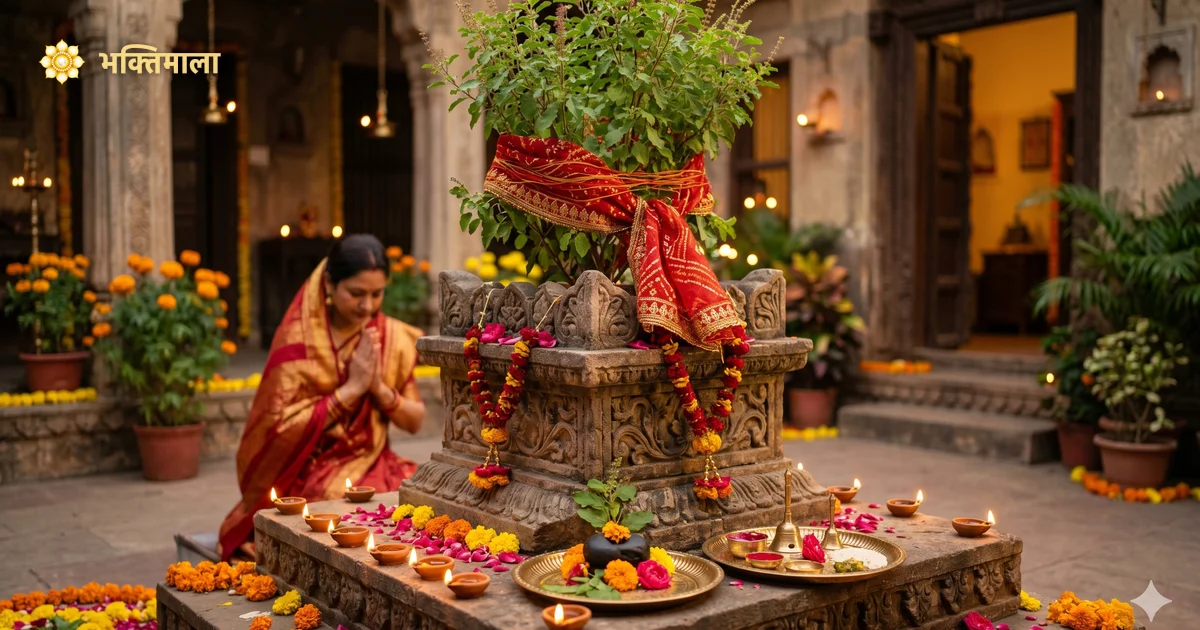
तुलसी विवाह 2026: महत्व, तिथि और संपूर्ण पूजा विधि
तुलसी विवाह तुलसी के पौधे का भगवान विष्णु से विवाह का उत्सव है और हिंदू विवाह सीजन की शुरुआत करता है। 2026 के उत्सव की पूरी जानकारी।
तुलसी विवाह हिंदू पंचांग के सबसे सुंदर संस्कारों में से एक है — पवित्र तुलसी का भगवान विष्णु से विधिवत विवाह, जिनका प्रतीक प्रायः शालिग्राम होता है। यह चातुर्मास की समाप्ति का प्रतीक है और विवाहों का शुभ मौसम आरंभ करता है।
तुलसी विवाह 2026 कब है?
तुलसी विवाह देव उठनी एकादशी (कार्तिक शुक्ल एकादशी) या अगले दिन (द्वादशी) को मनाया जाता है। 2026 में यह 20–21 नवंबर 2026 को है — सामान्य से लगभग तीन सप्ताह बाद, क्योंकि 2026 में अधिक मास है। विवाह प्रायः सूर्यास्त के बाद संध्या को, हिंदू विवाह की ही रीति से किया जाता है।
तुलसी विवाह का महत्व
तुलसी हिंदू धर्म का सबसे पवित्र पौधा है — माता लक्ष्मी का स्वरूप और भगवान विष्णु से गहराई से जुड़ा हुआ। पद्म पुराण और स्कंद पुराण के अनुसार, पतिव्रता वृंदा तुलसी के रूप में परिवर्तित हुईं और भगवान विष्णु ने उनका वरण किया — यही तुलसी विवाह का पौराणिक आधार है।
इस विवाह का पुण्य कन्यादान के बराबर माना जाता है। मान्यता है कि तुलसी विवाह करने वाले परिवार को पितरों की मुक्ति और समृद्धि का आशीर्वाद मिलता है।
तुलसी विवाह से विवाह का मौसम क्यों शुरू होता है?
चातुर्मास के चार महीनों (आषाढ़ से कार्तिक) में भगवान विष्णु योगनिद्रा में माने जाते हैं। चूंकि सभी शुभ कार्यों के अधिष्ठाता विष्णु हैं, इसलिए इस अवधि में विवाह नहीं किए जाते। देव उठनी एकादशी पर जागने के बाद पहला संस्कार स्वयं उनका विवाह होता है — तुलसी से। यह प्रतीक रूप से अन्य सभी विवाहों की अनुमति देता है।
पूजा विधि: घर पर तुलसी विवाह कैसे करें
सामग्री:
- सजे हुए गमले में स्वस्थ तुलसी का पौधा
- शालिग्राम (विष्णु का प्रतीक) या विष्णु की छोटी प्रतिमा
- तुलसी के लिए दुल्हन का श्रृंगार: लाल/पीली छोटी साड़ी या चुनरी, चूड़ियां, बिंदी, सिंदूर
- गन्ने — पारंपरिक रूप से तुलसी के चारों ओर मंडप की तरह लगाए जाते हैं
- फूल, विशेषकर गेंदा और सफेद फूल
- पंचामृत, धूप, दीपक, अक्षत
- प्रसाद के लिए मिठाई — विशेषकर बताशे और आंवला
विधि:
- तुलसी के गमले को रंगोली, फूलों और सिंदूर से सजाएं
- तुलसी को दुल्हन की तरह वस्त्र, आभूषण और बिंदी से सजाएं
- तुलसी के पास सजी चौकी पर शालिग्राम स्थापित करें
- दोनों के ऊपर गन्नों से छोटा मंडप बनाएं
- पंचामृत, फूल, धूप और दीप से पूजन करें
- तुलसी विवाह मंत्र पढ़ें और तुलसी-शालिग्राम की सात परिक्रमा (सात फेरे) करें
- प्रसाद चढ़ाकर परिवार और पड़ोसियों में बांटें
विशेष परंपराएं
- पड़ोसियों और रिश्तेदारों को आमंत्रित किया जाता है — यह एक असली विवाह की तरह मनाया जाता है
- कुछ परिवार प्रसाद में आंवला और गन्ना देते हैं — दोनों कार्तिक में मौसमी हैं
- संतान की कामना करने वाली महिलाएं तुलसी विवाह पर विशेष प्रार्थना करती हैं
- चातुर्मास में तुलसी को तोड़ा या उखाड़ा नहीं जाता — यह प्रतिबंध तुलसी विवाह के बाद हटता है